
Home ↣ Buy a Landscaping Business
Buy an Established Landscaping Business in British Columbia
An established landscaping business can provide immediate access to recurring maintenance contracts, trained crews, equipment, vehicles, supplier relationships, operating systems and a recognized local brand. For the right buyer, acquiring a functioning company may be more practical than building routes and customer relationships from the ground up.
Trades Business Broker helps qualified buyers identify and evaluate landscaping businesses throughout British Columbia. Opportunities may include residential maintenance companies, commercial grounds-care contractors, strata-focused operators, design-build firms, irrigation specialists, snow-removal businesses and mixed-service landscape companies.
The right acquisition must fit your operational experience, management capacity, financing structure, preferred region, service mix and tolerance for seasonal working-capital requirements.
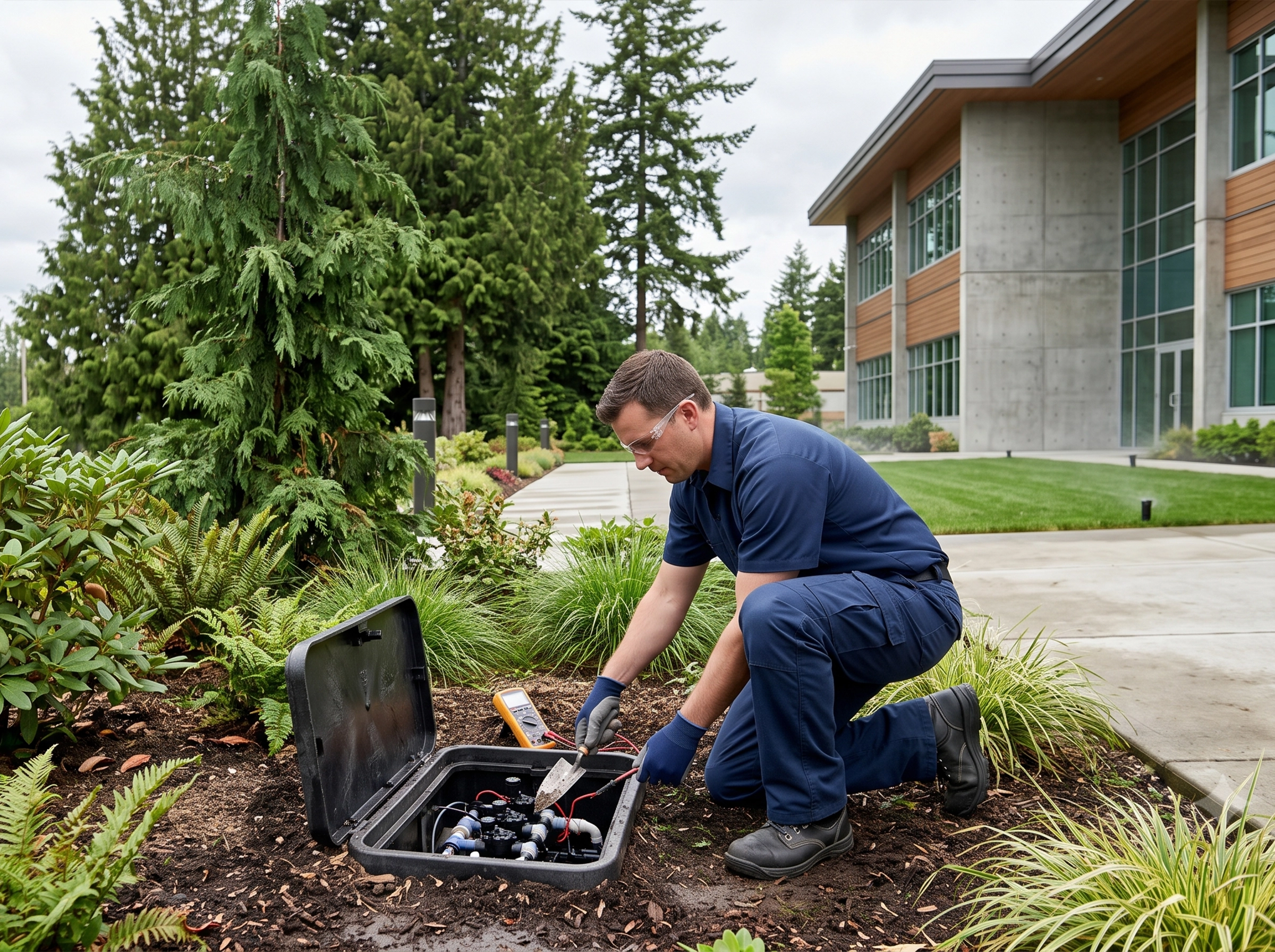
Why Buy an Existing Landscaping Business?
Recurring and Repeat Revenue
Established Routes and Geographic Density
Trained Crews and Supervisors
Equipment, Vehicles and Yard Infrastructure
Brand, Reviews and Referral Relationships
Systems and Operating History
Landscaping Businesses Buyers May Consider
- Residential lawn and garden maintenance companies
- Commercial grounds-maintenance contractors
- Strata and multi-family landscaping businesses
- Landscape design-build contractors
- Landscape design-build contractors
- Irrigation installation and service companies
- Tree, hedge and pruning service businesses
- Snow-removal and winter-maintenance operators
- Hardscape, retaining-wall and outdoor-living contractors
- Golf, institutional, municipal or industrial grounds-care businesses
- Mixed landscaping, excavation, fencing, drainage or property-service companies
Each model has a different labour structure, equipment requirement, customer profile, seasonality pattern and margin risk. Buyers should assess the actual earnings quality of the target rather than assuming all landscaping companies operate in the same way.
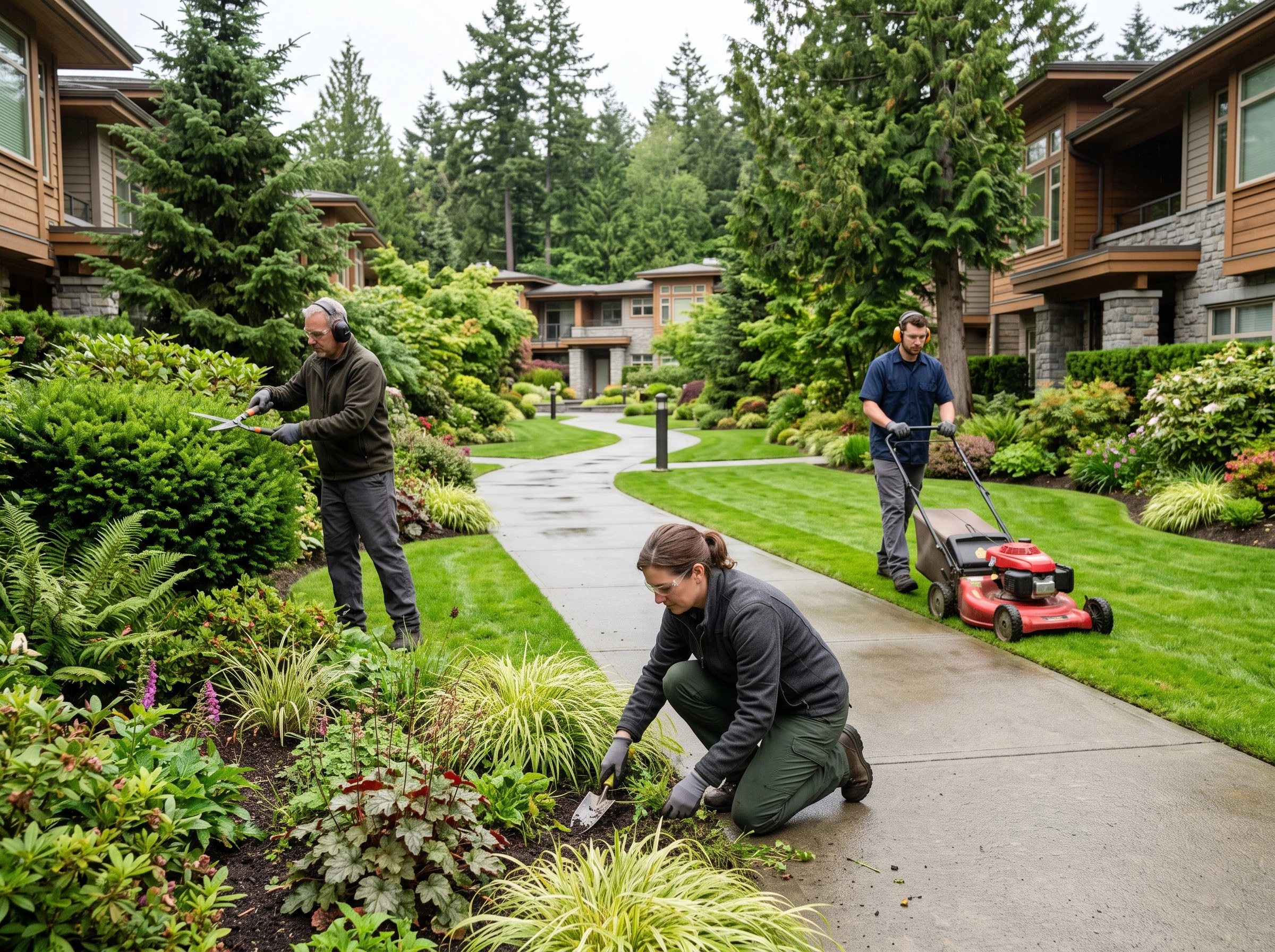
What Makes a Strong Landscaping Acquisition?
1. Supportable Normalized Earnings
Review normalized EBITDA or seller’s discretionary earnings, depending on company size. Test owner adjustments, personal expenses, unusual weather impacts, one-time projects, related-party rent and whether replacement management costs are fully reflected.
2. Durable Recurring Contracts
Examine written agreements, renewal history, cancellation rights, service frequency, pricing escalators and gross margin by contract. Recurring revenue is valuable only when customers are likely to remain and the work is priced properly.
3. Efficient Route Density
Map customer locations, crew routes, yard location and travel time. Dense routes can improve productivity, reduce fuel consumption and make supervision easier. Widely dispersed accounts may create hidden labour and fleet costs.
4. Balanced Service Mix
A combination of maintenance, enhancement projects, irrigation, clean-ups and winter work may reduce dependence on one revenue stream. Buyers should understand which services generate profit and which primarily keep crews busy.
5. Retainable Employees and Crew Leaders
Review tenure, compensation, seasonal staffing, overtime, immigration or work-status considerations, subcontractor use and who holds key customer knowledge. Dependence on a few forepersons or the seller can affect transition risk.
6. Reliable Estimating and Job Costing
Accurate labour budgets, material allowances, equipment charges and production tracking are essential. Weak estimating or inconsistent job costing may cause apparently strong revenue to produce poor cash flow.
7. Diversified Customers
Review concentration by property manager, strata, commercial client, municipality, builder and residential route. A single large contract may create material renewal and pricing risk.
8. Appropriate Fleet and Equipment
Inspect utilization, condition, maintenance records, ownership, financing and replacement needs. Equipment value should not be confused with business goodwill, and excess assets may not contribute to earnings.
9. Reduced Owner Dependence
A company is generally more transferable when estimating, scheduling, customer service, purchasing and quality control are handled by a team rather than only by the owner.
10. Strong Safety and Compliance Practices
Review training, incident history, vehicle practices, chemical handling, pesticide requirements, equipment procedures and WorkSafeBC standing. Buyers should confirm the obligations applicable to the target’s exact services.
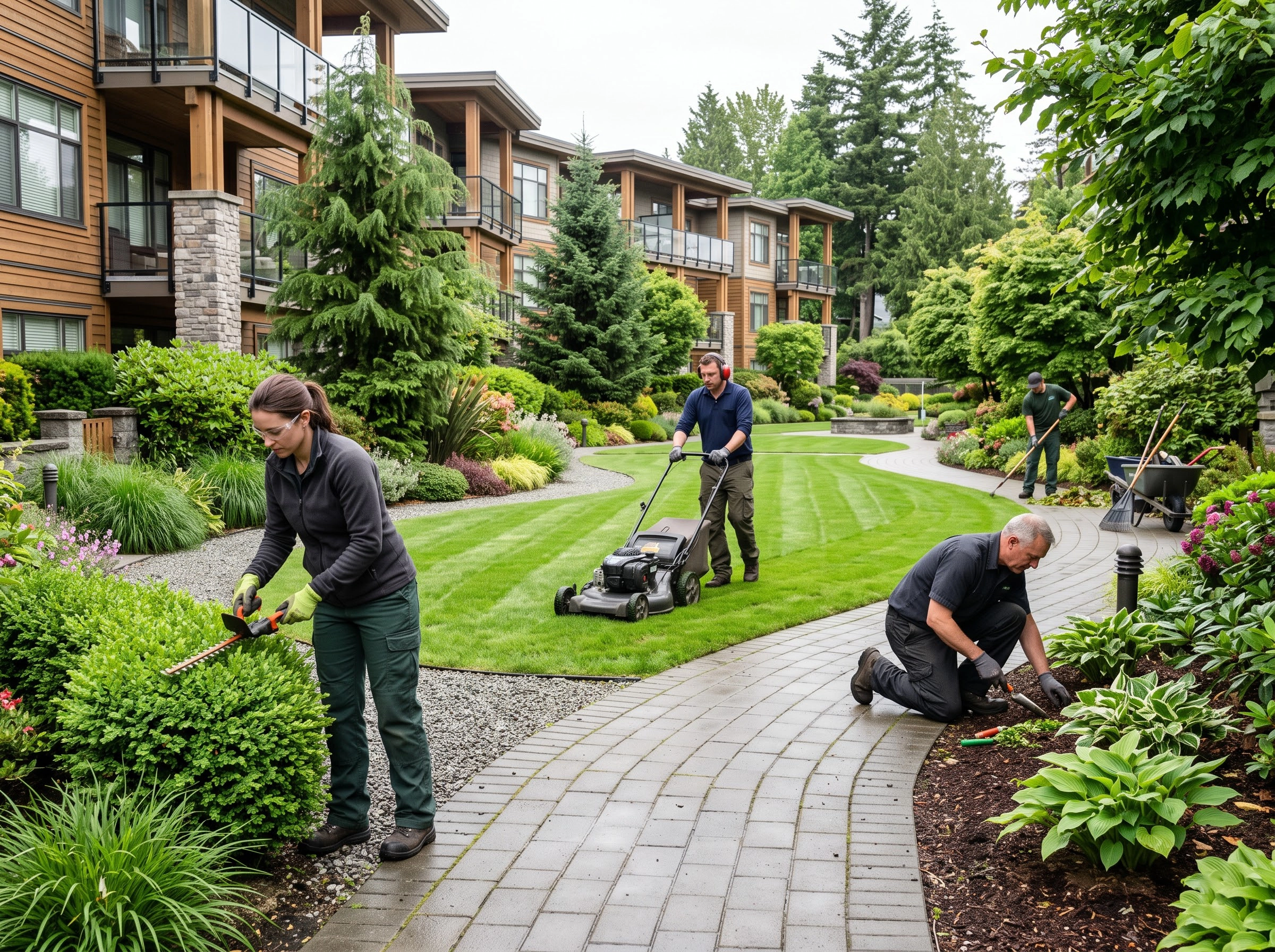
Maintenance, Design-Build and Seasonal Service Models
Residential Maintenance
Commercial and Strata Grounds Care
Landscape Construction and Design-Build
Irrigation Services
Snow and Ice Management
Enhancement and Seasonal Programs
Key Financial and Operational Metrics to Review
- Normalized EBITDA or seller’s discretionary earnings
- Recurring maintenance revenue as a percentage of total revenue
- Renewal, cancellation and customer-retention history
- Gross margin by maintenance, construction, irrigation, enhancement and snow services
- Revenue and gross profit by customer, property manager, route and crew
- Route density, travel time and billable labour utilization
- Backlog by contract status, start date, expected margin and completion timing
- Seasonal cash-flow requirements and working-capital needs
- Labour cost, overtime, crew productivity and seasonal staffing dependence
- Equipment utilization, repair costs and replacement requirements
- Snow-contract structure, standby costs and weather sensitivity
- Accounts receivable aging, deposits, holdbacks and bad debt
- Lead sources, close rates, online reputation and referral concentration
- Owner dependence in sales, estimating, scheduling and key relationships
No single metric establishes value. The consistency, quality and transferability of earnings are more important than headline revenue, total customer count or the replacement cost of equipment.
How Landscaping Businesses Are Commonly Valued
Privately held landscaping businesses are often considered using a multiple of normalized earnings, with the appropriate approach depending on size, management depth, recurring revenue, customer concentration, route density, equipment needs and owner involvement.
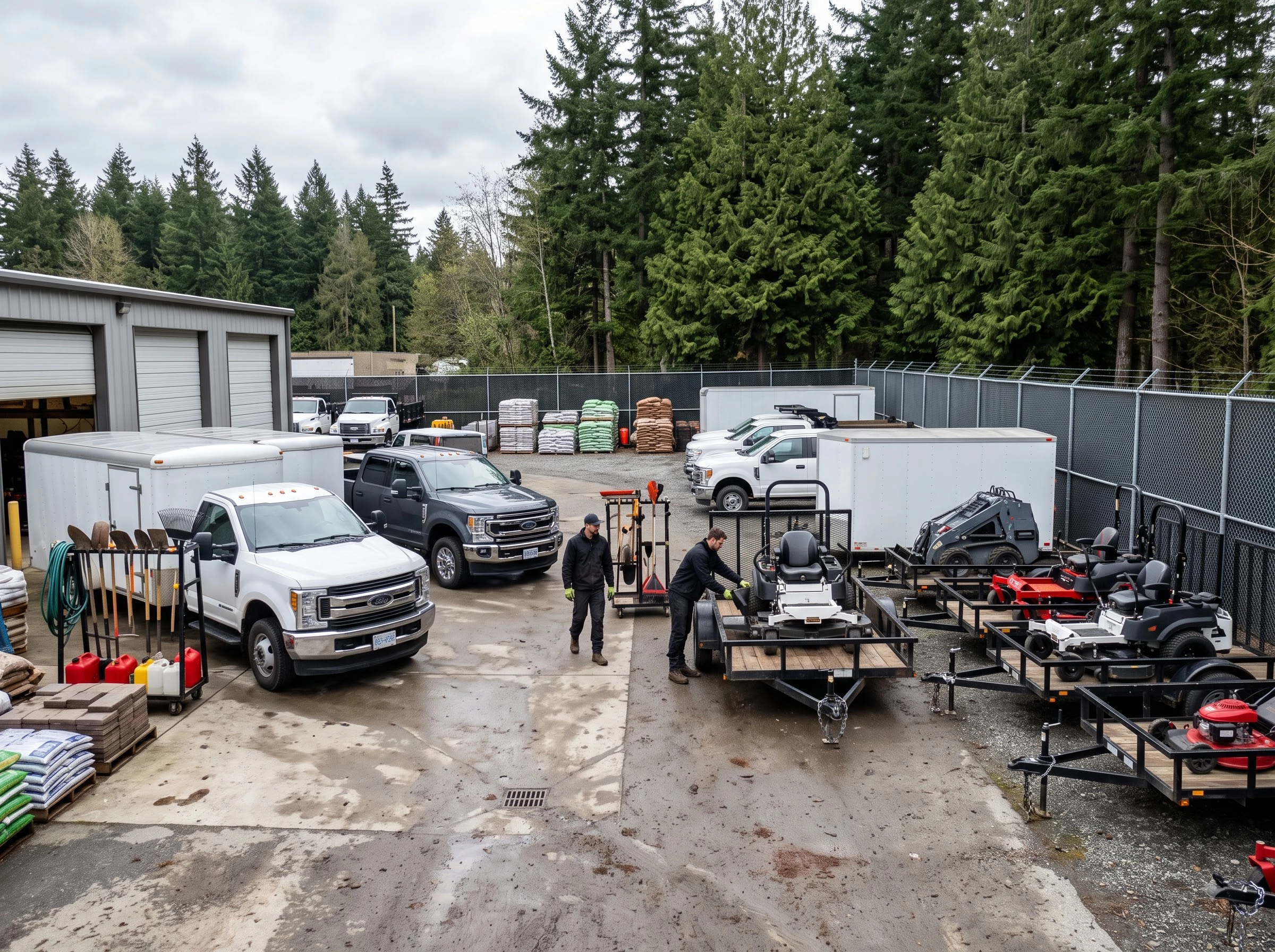
Asset value may matter where the company owns significant trucks, trailers, mowers, snow equipment, compact machinery, inventory or real estate. However, the market value of equipment does not automatically equal the value of the operating business.
Buyers should not rely on generic industry multiples without understanding the assumptions behind them. A defensible valuation requires business-specific financial analysis, quality-of-earnings review and an assessment of transition risk.
Due Diligence for a Landscaping Business Acquisition
Financial Review
- Historical financial statements and tax returns
- Monthly sales and gross margin by service line
- Normalized earnings adjustments
- Customer-level revenue and profitability
- Accounts receivable and payable aging
- Deposits, holdbacks and work-in-progress schedules
- Seasonal working-capital requirements
- Capital expenditures and equipment replacement needs
Contract and Customer Review
- Maintenance agreements and renewal terms
- Cancellation rights and pricing provisions
- Customer concentration and retention history
- Property-manager and strata relationships
- Snow-contract structure and weather clauses
- Backlog, quotes, deposits and uncompleted work
- Transferability of key accounts and referral relationships
Operational Review
- Route maps, scheduling systems and crew assignments
- Estimating, job-costing and production controls
- Crew capacity, supervision and seasonal hiring practices
- Fleet, trailers, mowers, snow equipment and compact machinery
- Yard, shop, storage and lease arrangements
- Supplier terms, fuel controls and material purchasing
- Irrigation, chemical, pesticide and specialized service procedures
Legal, Safety and Compliance Review
- Corporate records and ownership of assets
- WorkSafeBC standing, claims and incident history
- Employment agreements, payroll practices and subcontractor classification
- Vehicle, equipment, commercial general liability and snow-related insurance
- Permits, pesticide rules, municipal requirements and environmental obligations applicable to the services
- Customer claims, property damage, deficiencies and warranty matters
- Privacy and ownership of customer databases and digital accounts
Transition Review
- Seller’s role in sales, estimating and account management
- Employee-retention plan and communication timing
- Customer-introduction and contract-consent requirements
- Training period and post-closing support
- Brand, phone numbers, website, reviews and online listings
- Software, passwords, records and operating procedures
Financing a Landscaping Business Purchase
Financing may include buyer equity, commercial acquisition lending, equipment financing, seller financing or a combination of sources. The structure depends on purchase price, normalized cash flow, tangible assets, working-capital needs, buyer experience and lender requirements.
Landscaping transactions may require additional planning because revenue and cash flow can be seasonal, equipment may be heavily financed, and snow income can vary with weather. Buyers should budget for payroll, repairs, fuel, insurance, deposits, tax obligations and the timing difference between performing work and collecting receivables.
A financing discussion should begin early. Buyers should work with qualified lenders, accountants and legal advisors and should not assume that every asset, add-back or projected contract will receive full lender credit.
Common Mistakes When Buying a Landscaping Business
- Valuing the company based on revenue or customer count without testing profit by route and service line
- Assuming all maintenance contracts will renew after ownership changes
- Ignoring route density, travel time and unproductive labour
- Underestimating seasonal working-capital and equipment-replacement needs
- Treating snow revenue as predictable without reviewing contract structure and weather history
- Failing to confirm employee and crew-leader retention
- Overlooking customer concentration with one strata manager, commercial client or builder
- Accepting seller add-backs without evidence
- Failing to inspect equipment, leases, liens and maintenance records
- Underestimating the owner’s role in estimating, scheduling and customer relationships
- Skipping legal, tax, employment, insurance and environmental review
- Sharing confidential information before qualification and NDA completion
Our Buyer Acquisition Process
Step 1 – Buyer Registration
We begin by understanding your background, preferred region, target service mix, investment range, financing capacity and desired level of day-to-day involvement.
Step 2 – Qualification and Confidentiality
Before confidential information is released, buyers may be required to provide identification, financial capacity information and a signed confidentiality agreement.
Step 3 – Opportunity Review
We introduce suitable opportunities and provide available information to help you decide whether a business warrants deeper investigation.
Step 4 – Initial Assessment
We help frame the key questions around earnings, contracts, route density, employees, equipment, seasonality, owner dependence and transition.
Step 5 – Offer and Deal Structure
A qualified buyer may prepare a letter of intent or offer with appropriate conditions relating to due diligence, financing, lease, contracts, employees, equipment and other material matters.
Step 6 – Due Diligence and Closing
The buyer and professional advisors verify financial, legal, operational, tax and commercial information before conditions are removed and closing documents are completed.
Step 7 – Transition
A practical transition plan may include employee communication, customer introductions, route and software training, supplier handover and limited seller support after closing.
Confidentiality When Buying a Landscaping Business
Most landscaping businesses are marketed confidentially. Premature disclosure can unsettle employees, customers, property managers, suppliers and competitors. Buyers should not contact staff, customers, landlords or business partners without written authorization through the transaction process.
Confidentiality protects both parties and helps preserve business value. Qualified buyers should be prepared to sign an NDA and demonstrate financial capacity before receiving identifying information or detailed financial records.
Who Is This Page For?
- Existing landscaping owners seeking geographic expansion
- Construction or property-service operators adding recurring maintenance
- Experienced managers pursuing business ownership
- Search-fund, family-office or private buyers seeking an established local service company
- Strategic buyers adding irrigation, snow, design-build or commercial capabilities
- Entrepreneurs with relevant operational, horticultural, construction or management experience
Frequently Asked Questions
Pricing varies widely based on normalized earnings, recurring contracts, route density, customer concentration, equipment, management depth and working-capital needs. A business-specific valuation is more reliable than a generic multiple.
Some contracts may transfer automatically, while others require consent, renewal or a new agreement. Buyers should review the exact wording, customer relationship and historical renewal pattern.
Recurring maintenance can improve predictability, but only when contracts are profitable, customers are diversified and renewals are durable. Project work may also be valuable when estimating, backlog and margins are strong.
Review the contract model, historical snowfall, standby obligations, equipment commitments, staffing, insurance and margin across multiple seasons. One unusually heavy or light winter should not be treated as normal without adjustment.
The asset list may include trucks, trailers, mowers, compact equipment, snowplows, spreaders, irrigation tools, hand tools and inventory. Ownership, leases, liens and condition must be verified.
Route density can materially affect labour productivity, fuel, supervision and service quality. Buyers should map routes and compare travel time with billable time.
It may be possible, particularly where a strong management team remains, but buyers should realistically assess technical knowledge, seasonal staffing, safety, estimating and customer-service demands.
Timing depends on business complexity, financing, due diligence, contracts, lease matters and the parties’ readiness. No responsible advisor should promise a fixed closing period without reviewing the specific transaction.
A negotiated transition is common. The duration and scope should reflect the seller’s role, employee depth, customer relationships and buyer experience.
Complete the buyer-registration process, provide the requested qualification information and sign the applicable confidentiality agreement. Suitable opportunities can then be introduced as they become available.
Looking for an established landscaping business in British Columbia?
Register confidentially with Trades Business Broker to discuss your acquisition criteria, financing readiness and preferred service model. We help qualified buyers evaluate landscaping opportunities with a practical focus on earnings quality, contracts, routes, crews, equipment and transition risk.