
Home ↣ Sell a Plumbing Business
Sell Your Plumbing Business with Confidence
You have spent years building customer relationships, training employees, investing in vehicles and equipment, earning referrals and creating a reputation for reliable service. When the time comes to sell, the process should protect the value you have created and the confidentiality your business depends on.
Trades Business Broker helps plumbing company owners across British Columbia prepare, position and confidentially market their businesses to qualified buyers. We understand that a plumbing business is more than a set of financial statements. Buyers also assess service demand, recurring customers, technician depth, dispatch systems, commercial contracts, fleet condition, owner involvement and the company’s ability to continue operating after a change in ownership.
Whether you are planning to retire, pursue another opportunity or simply want to understand your options, the first step can be a private, no-obligation conversation.
Is It the Right Time to Sell Your Plumbing Company?
Many owners begin thinking about a sale long before they are ready to list the business. They may be tired of emergency calls, facing succession questions, concerned about labour shortages or simply wondering whether the value they have built is enough to support retirement.
The best time to explore a sale is usually before a personal or operational issue forces a quick decision. Early planning creates time to improve records, reduce owner dependence, retain key employees and address issues that could affect buyer confidence.
- Am I ready to step away from daily operations?
- Would the business continue successfully without me?
- Are my financial records organized and defensible?
- Do I have licensed or experienced employees who are likely to stay?
- How dependent is the company on a few large customers?
- What would a qualified buyer likely pay in today’s market?
A confidential discussion can help you understand whether it makes sense to sell now, prepare for a future sale or continue building value.


Why Plumbing Businesses Attract Buyers
Well-run plumbing businesses can attract entrepreneurs, experienced tradespeople, strategic buyers and larger mechanical contractors. Plumbing services are essential, and demand may come from residential service, commercial maintenance, renovations, construction, property management, emergency response and recurring customer relationships.
Buyers may be attracted to the following characteristics:
- Strong local reputation and referral activity
- Established service area and customer database
- Reliable service and emergency-call revenue
- Commercial or property-management relationships
- Experienced plumbers, apprentices, gas fitters and office staff
- Efficient dispatch, scheduling and invoicing systems
- Branded fleet vehicles and specialized equipment
- Maintenance programs and repeat-service customers
- Documented estimating, pricing and job-costing procedures
- Opportunities to expand service lines or geographic coverage
What Makes a Plumbing Business Valuable?
1. Sustainable Earnings
Buyers focus on the company’s ability to generate reliable earnings after ownership changes. Consistent profitability, reasonable margins and clean financial records generally support stronger buyer confidence than revenue alone.
2. Service and Repair Revenue
Recurring residential and commercial service work can be attractive because it may be less dependent on construction cycles. Buyers often look closely at the balance between service, renovation, new construction and project work.
3. Commercial Contracts and Property-Management Relationships
Long-standing commercial accounts, strata relationships, maintenance programs and property-management clients may increase predictability. Buyers will assess contract terms, concentration and whether the relationships belong to the company rather than only to the owner.
4. Emergency and After-Hours Operations
Emergency service can be profitable and create customer loyalty, but buyers will also evaluate staffing, call rotation, burnout risk and whether the operation depends on the owner personally handling urgent work.
5. Licensed and Experienced Employees
Journey person plumbers, apprentices, gas fitters, estimators, service managers and capable office staff can be major value drivers. Buyers want confidence that essential employees will remain and that the company can recruit and train new staff.
6. Owner Dependence
A plumbing business may be difficult to transfer if the owner personally performs estimates, dispatches technicians, manages every customer relationship and completes most technical work. Strong supervisors, documented systems and delegated responsibilities improve transferability.
7. Customer Concentration
A diversified customer base generally reduces risk. Heavy dependence on one general contractor, developer, property manager or institutional client may affect value even when current revenue is strong.
8. Fleet, Equipment and Inventory
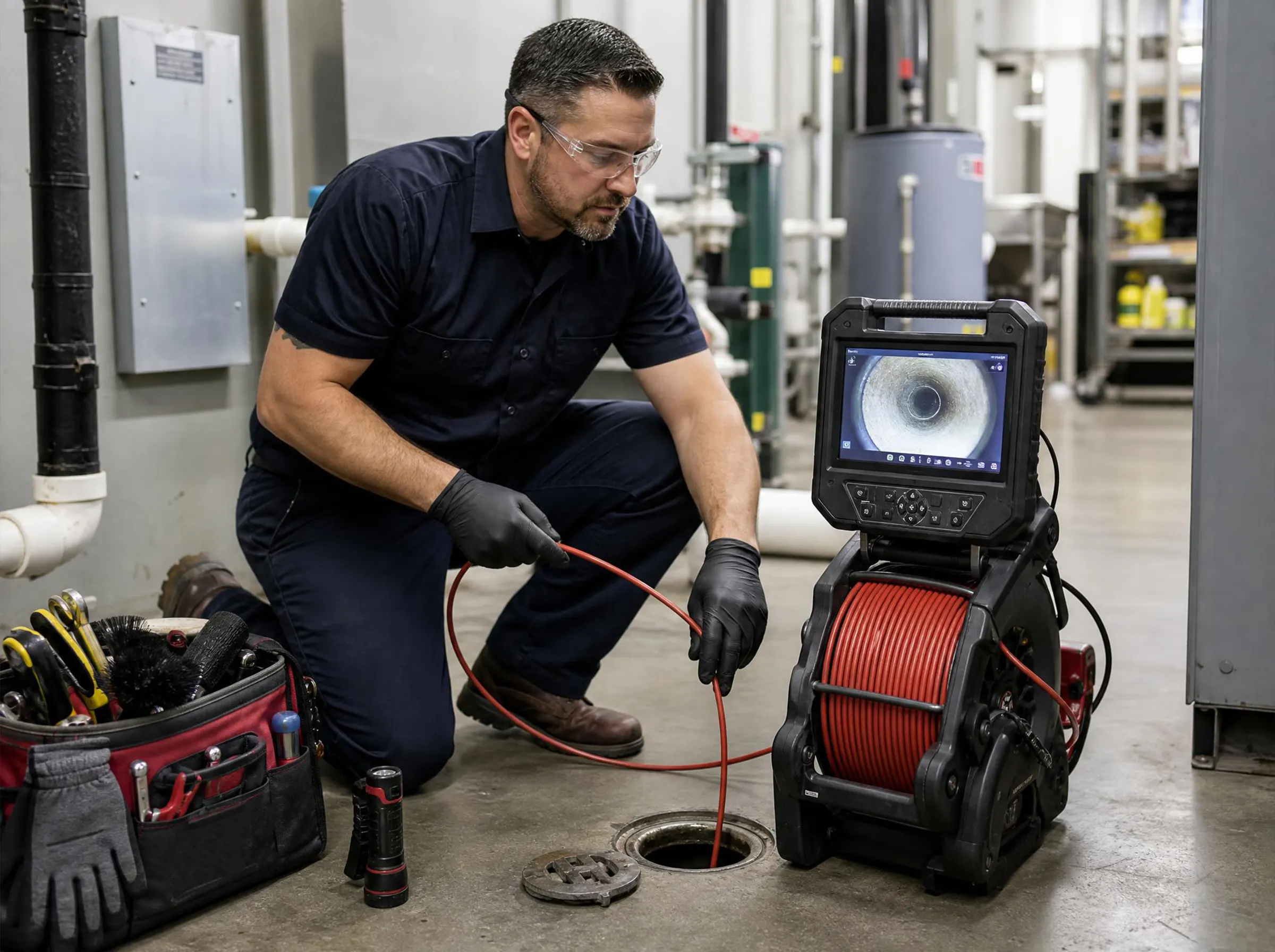
Service vans, drain-cleaning equipment, inspection cameras, jetters, tools, inventory and shop equipment are important operational assets. Buyers consider condition, financing, replacement needs and whether the asset base is appropriate for current revenue.
9. Dispatch, CRM and Job-Costing Systems
Efficient scheduling, customer records, technician tracking, quoting, invoicing and job-costing systems can make the company easier to operate and scale. Weak systems may create uncertainty during due diligence.
10. Reputation and Reviews
A strong brand, positive online reviews, referral sources and a history of dependable work can support marketability. Reputation is most valuable when it can transfer with the company.
11. Seasonality and Revenue Mix
Buyers evaluate whether revenue is stable throughout the year and how much depends on construction starts, emergency work, heating seasons or other cyclical factors.
12. Growth Potential
A strong brand, positive online reviews, referral sources and a history of dependable work can support marketability. Reputation is most valuable when it can transfer with the company.
Types of Plumbing Businesses We Assist
- Residential service plumbing companies
- Commercial plumbing contractors
- Drain-cleaning and sewer-service businesses
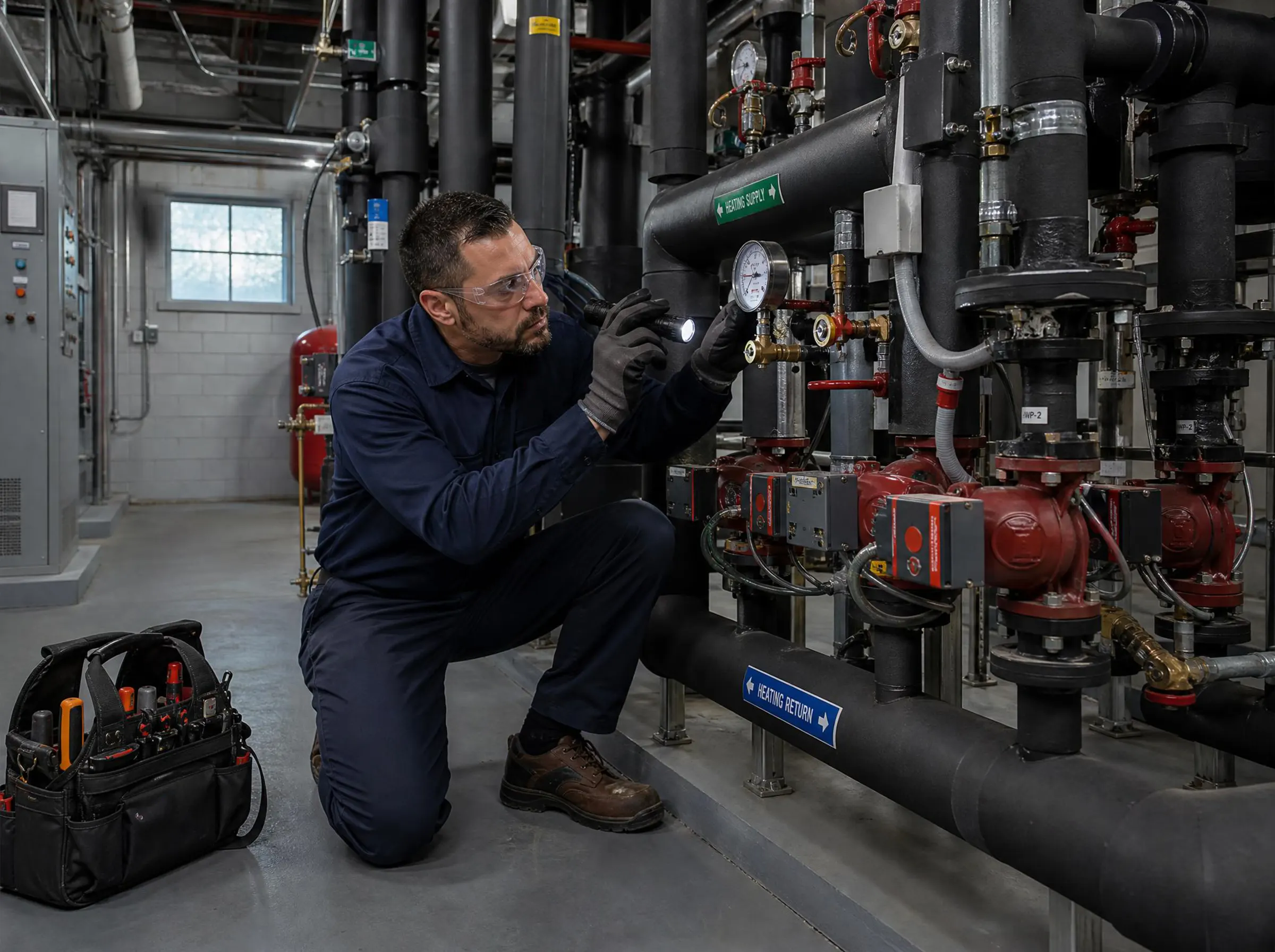
- Hydronic heating and boiler-service companies
- Gas-fitting and mechanical service businesses
- New-construction plumbing contractors
- Renovation and tenant-improvement plumbing companies
- Property-maintenance and emergency plumbing businesses
- Specialty plumbing and water-treatment companies
- Combined plumbing, HVAC and mechanical contractors
How Plumbing Businesses Are Commonly Valued
Normalized Earnings
Market Comparisons
Asset Considerations
Strategic Buyer Value
Common Issues That Can Reduce Buyer Confidence
Incomplete Financial Records
Unclear bookkeeping, cash transactions, unrecorded adjustments and delayed financial statements make it harder for buyers and lenders to verify earnings.
Heavy Dependence on the Owner
If the owner is the only estimator, master plumber, dispatcher or relationship manager, a buyer may see significant transition risk.
Unstable Workforce
High turnover, unresolved compensation issues or dependence on one key technician can affect continuity.
Customer Concentration
A large portion of revenue tied to one contractor, developer or property manager may create material risk.
Deferred Vehicle or Equipment Replacement
A buyer may reduce the price or seek different terms if major fleet or equipment expenditures will be required soon after closing.
Undocumented Agreements
Handshake arrangements with employees, contractors, customers, landlords or suppliers can create uncertainty during due diligence.
Compliance or Licensing Concerns
Expired licences, unresolved safety issues, insurance gaps, tax problems or permit concerns can delay or prevent a transaction.
Unrealistic Pricing
Pricing based on gross revenue, equipment cost or emotional attachment—without reference to sustainable earnings and market risk—can discourage qualified buyers.

How to Prepare Your Plumbing Business for Sale
Organize Financial Records
Build Management Depth
Document Operating Systems
Strengthen Employee Retention
Review Customer Concentration
Maintain Fleet and Equipment Records
Clarify Licences and Qualifications
Resolve Avoidable Problems
Our Confidential Process for Selling a Plumbing Business
Step 1 – Confidential Consultation
We discuss your business, goals, expected timeline and concerns. This initial conversation is private and does not obligate you to sell.
Step 2 – Business Review and Valuation
We review financial and operational information to understand earnings, assets, employees, customer mix, owner involvement, risks and marketability.
Step 3 – Preparation and Positioning
We help identify the company’s strengths, organize key information and prepare a confidential marketing package that presents the opportunity clearly and professionally.
Step 4 – Confidential Marketing
The business is introduced to qualified buyers through appropriate confidential channels. Identifying information is protected until buyers are screened and confidentiality requirements are completed.
Step 5 – Buyer Qualification
We evaluate the buyer’s experience, financial capacity, financing plan, timing and ability to operate or manage the company.
Step 6 – Offers and Negotiation
We help manage offers, pricing, terms, conditions, transition expectations and the structure of the transaction.
Step 7 – Due Diligence
Buyers review financial, operational, legal, employee, customer, asset and compliance information. We coordinate with accountants, lawyers, lenders, landlords and other advisors as required.
Step 8 – Closing and Transition
Once conditions are satisfied, the transaction proceeds to closing and the agreed transition begins. The objective is to protect continuity for customers, employees and the business.
Confidentiality Is Essential
Employees, customers, suppliers and competitors should not learn that a plumbing business is for sale before the owner is ready. Premature disclosure can create staff uncertainty, customer concern and unnecessary disruption.
Our process is designed to limit disclosure, screen prospective buyers and require appropriate confidentiality commitments before detailed information is shared. Marketing can be structured so the company is described without immediately revealing its identity
Who May Buy a Plumbing Business?
- Experienced plumbers seeking ownership
- Employees or management teams
- Entrepreneurs with operational or construction experience
- HVAC or mechanical contractors expanding service lines
- Regional plumbing companies entering a new territory
- Strategic buyers seeking technicians, customers or commercial accounts
- Private investors working with experienced operators
- Family members or internal successors
The strongest buyer is not always the buyer offering the highest headline price. Financing capacity, industry experience, transition expectations, conditions and likelihood of closing must also be considered.
Frequently Asked Questions
Timing varies based on size, asking price, profitability, buyer demand, financing, records and transaction complexity. Proper preparation can reduce delays, but no responsible broker should guarantee a specific closing date.
Potentially, but the transition and licensing requirements must be addressed early. The solution may involve buyer qualifications, retaining licensed staff, a transition period or another structure appropriate to the business and applicable rules.
A business can still be sold, but heavy owner dependence may affect value and the buyer’s transition needs. Delegating duties and documenting responsibilities before the sale may improve transferability.
Recurring maintenance and service relationships can increase predictability, particularly when they are documented, profitable and transferable. Buyers will review renewal history, margins and customer concentration.
Commercial relationships can be attractive, but value depends on profitability, contract terms, concentration, payment history and transferability. A balanced mix of reliable service and project revenue may reduce risk.
Employee continuity is often important to both buyer and seller. The timing and manner of employee communication should be planned carefully and handled with legal advice where appropriate.
Usually the operating assets required to run the company form part of the transaction, but the exact assets, debt, leases and working capital are negotiated in the sale agreement.
Yes. Confidential marketing can describe the business, financial profile, region and service mix without initially disclosing the name, address or other identifying details.
An unsolicited offer may be worth exploring, but owners should understand valuation, terms, financing risk, conditions and alternatives before agreeing. A high stated price can be less attractive if the structure or closing risk is weak.
No. Many owners begin with a confidential planning or valuation conversation months or years before going to market.
Thinking About Selling Your Plumbing Business?
You do not need to make the decision alone—or wait until retirement, burnout or another event forces the timing. A confidential discussion can help you understand the company’s marketability, potential value and the steps required to prepare for a successful sale.
There is no obligation to list your business. The first conversation is simply an opportunity to understand your options and make a more informed decision.