
Home ↣ Buy a Trades Business
Buy an Established Trades or Construction Business in British Columbia
Acquiring an established trades business can provide a faster and more predictable path to ownership than starting from the ground up. The right company may already have trained employees, customers, equipment, operating systems, supplier relationships and a reputation in the market.
Trades Business Broker works with qualified buyers seeking HVAC, plumbing, electrical, roofing, landscaping, restoration, construction and other skilled-trades businesses throughout British Columbia.
Our role is to help you understand the opportunity, protect confidential information, evaluate the business carefully and move through the transaction with clear expectations.
Why Buy an Existing Trades Business?
Starting a new company can require years of hiring, marketing, customer development and trial-and-error. An established business may allow a buyer to step into an operating platform with existing revenue and infrastructure.
Existing Customers and Revenue
An established company may already have repeat customers, commercial relationships, service agreements and active projects. This can reduce the uncertainty of building a customer base from zero.
Experienced Employees
Recruiting skilled tradespeople is often one of the greatest challenges in the industry. A business with capable technicians, supervisors, estimators and office staff may provide significant operational value.
Reputation and Market Presence
Years of completed work, referrals, supplier relationships and online reviews can create credibility that would take a new company considerable time to develop.
Vehicles, Equipment and Systems
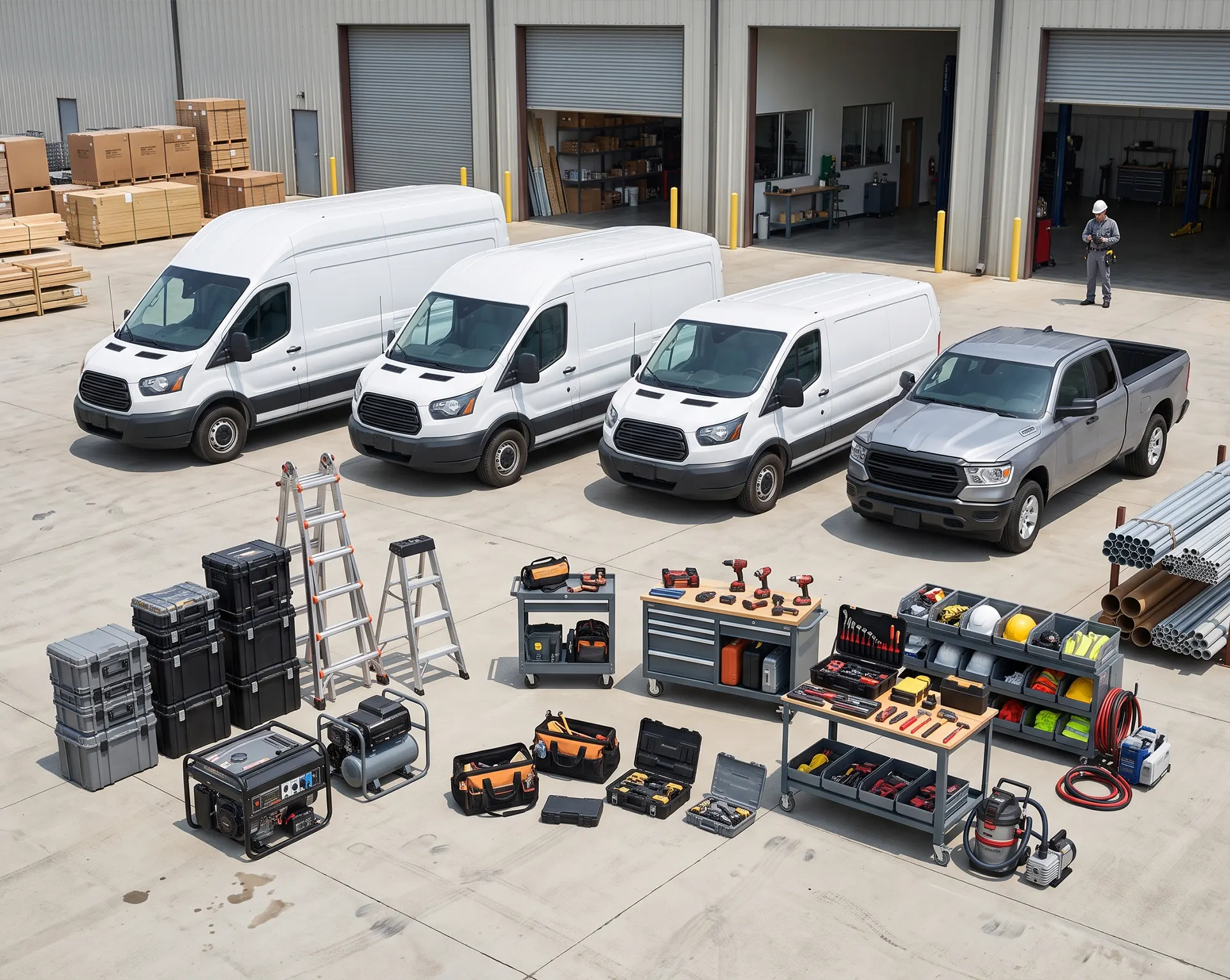
The acquisition may include service vehicles, tools, equipment, software, estimating systems, safety procedures and other infrastructure needed to operate.
Established Cash Flow
A profitable company may provide immediate earnings potential, although buyers must verify the quality and sustainability of those earnings during due diligence.
Growth Opportunities
A buyer may be able to add services, improve marketing, expand into new locations, strengthen operations or use an existing company as a platform for further acquisitions.

Who Buys Trades and Construction Businesses?
Different buyers pursue trades businesses for different reasons. Understanding your own strategy is essential before reviewing opportunities.
Experienced Operators
Entrepreneurs and Career Changers
Strategic Buyers
Private Investors and Acquisition Entrepreneurs
Family Businesses and Successor Owners
Types of Businesses We Help Buyers Acquire
- HVAC and mechanical contracting companies
- Plumbing and drain-service businesses
- Electrical contracting companies
- Roofing and building-envelope businesses
- Landscaping and property-maintenance companies
- Restoration and remediation businesses
- General contractors and construction companies
- Painting, drywall, flooring and finishing contractors
- Excavation, concrete and civil-service companies
- Fire protection, security and specialty service businesses
- Other skilled-trades and field-service companies

What Makes a Strong Acquisition Opportunity?
A business should not be judged by revenue or asking price alone. Buyers need to understand the quality, transferability and risk of the company’s earnings.
Consistent Financial Performance
Transferable Customer Relationships
Capable Employees and Management
Manageable Owner Dependence
Reliable Systems and Records
Appropriate Equipment and Working Capital
Clear Licensing and Compliance
Realistic Growth Potential
Our Process for Buying a Trades Business
Step 1 – Buyer Consultation
We begin by discussing your background, acquisition goals, preferred industries, location, budget, financing and desired level of day-to-day involvement.
Step 2 – Buyer Qualification
Sellers expect sensitive information to be shared only with serious prospects. Buyers may be asked to provide background information, proof of funds, financing information and a signed confidentiality agreement.
Step 3 – Opportunity Review
We introduce suitable opportunities when available and provide authorized information in stages. Initial materials are designed to help determine whether further investigation is appropriate without unnecessarily exposing confidential details.
Step 4 – Meetings and Preliminary Evaluation
Qualified buyers may meet the seller, ask questions and learn more about the business. The objective is to understand operations, ownership responsibilities, employees, customers and the potential transition.
Step 5 – Offer and Negotiation
When a buyer wishes to proceed, an offer should clearly address price, deposit, conditions, financing, assets, working capital, training, transition and other important terms. Legal and accounting advice is strongly recommended.
Step 6 – Due Diligence
The buyer and professional advisors review financial, legal and operational information. Due diligence should verify material representations and help the buyer understand the risks and obligations being assumed.
Step 7 – Financing and Approvals
The transaction may depend on lender approval, landlord consent, licensing, franchisor approval or other third-party requirements. These should be identified early and managed carefully.
Step 8 – Closing and Transition
Once all conditions are satisfied, legal documents are completed and ownership transfers. The seller may provide an agreed transition period to introduce customers, employees, suppliers and operating systems.
Buyer Qualification and Confidentiality
Private business sales require discretion. Employees, customers, suppliers and competitors may not know that a company is being considered for sale. Buyers are therefore expected to respect a structured confidentiality process.
- Sign an appropriate confidentiality agreement before receiving sensitive information
- Provide accurate information about experience, financial capacity and acquisition objectives
- Direct questions and meeting requests through the agreed process
- Avoid contacting employees, customers, landlords, suppliers or competitors without written authorization
- Use confidential information only to evaluate the specific acquisition opportunity
- Return or destroy information if the opportunity is not pursued
Following these expectations protects the seller’s business and helps qualified buyers maintain credibility throughout the process.

Financing a Trades Business Acquisition
Financing should be considered before a buyer becomes deeply involved in a transaction. The amount and structure available will depend on the buyer, the business, the assets, the quality of the financial records and lender requirements.
A transaction may include a combination of buyer equity, commercial financing, asset-backed lending, seller financing or other approved sources. Buyers should speak with lenders and professional advisors early rather than assuming the full purchase price can be financed.
In addition to the purchase price, buyers should plan for legal and accounting fees, lender costs, working capital, insurance, deposits, licences, equipment needs and transition expenses.
Understanding the Asking Price
The asking price is a starting point for discussion, not a substitute for due diligence. Buyers should assess normalized earnings, assets, liabilities, working capital, market conditions and transaction structure.
A lower-priced business is not automatically a better opportunity. The most important questions are whether the earnings are supportable, the risks are understood and the company fits the buyer’s experience, financing and goals.

Due Diligence: What Buyers Commonly Review
- Financial statements, tax returns and current year results
- Banking, payroll and sales-tax records where appropriate
- Customer concentration, contracts, recurring work and backlog
- Employee roles, compensation, tenure and certifications
- Vehicles, tools, machinery, inventory and equipment financing
- Lease terms, property arrangements and landlord requirements
- Licences, permits, insurance, safety records and regulatory compliance
- Legal claims, warranties, disputes and contingent liabilities
- Supplier relationships and material purchasing arrangements
- Job costing, estimating, scheduling and operating systems
- Owner responsibilities and the proposed transition plan
- Working-capital requirements and cash-flow timing
The scope of due diligence depends on the company and transaction. Buyers should retain qualified legal, accounting, tax, lending and industry advisors as appropriate.
Common Mistakes Buyers Should Avoid
Focusing Only on Revenue
Revenue does not reveal profitability, cash flow, working-capital needs or risk. Buyers should understand how the company actually earns money.
Underestimating the Owner’s Role
A business may appear independent while the seller quietly manages sales, estimating, relationships and problem-solving. Buyers should document the seller’s responsibilities before committing.
Assuming Employees Will Stay
Employee retention cannot be taken for granted. Understand key-person risk, compensation, culture and how the transition will be communicated.
Waiting Too Long to Arrange Financing
A buyer can lose credibility or miss an opportunity when financing has not been explored early.
Skipping Professional Advice
Business acquisitions involve legal, tax, financial and operational issues. Attempting to reduce costs by avoiding appropriate advice can create much larger problems later.
Contacting the Business Directly
Unapproved contact with employees, customers or suppliers can harm the company and may breach confidentiality obligations.
Relying on Optimistic Projections
Potential is valuable only when it can be converted into results. The acquisition should make sense based on verified information and a realistic operating plan.
Ignoring Working Capital
The buyer may need significant cash after closing to fund payroll, materials, projects and receivables. Purchase price and operating capital must be planned together.
Buying a Business When You Are New to the Trades
Industry experience can be valuable, but not every buyer must personally perform the technical work. The key is to understand the company’s licensing, supervision and management requirements and to ensure the necessary qualified people will remain in place.
A buyer entering from outside the industry should pay particular attention to employee retention, technical leadership, estimating, project risk, safety, customer expectations and the practical demands of ownership.
Why Work With Trades Business Broker?
Trades and construction businesses have operational characteristics that differ from many retail or professional-service companies. Labour, licensing, equipment, project risk, working capital, backlog, customer concentration and owner dependence all require careful consideration.
We help qualified buyers navigate confidential opportunities, communicate effectively with sellers and move through the acquisition process in an organized manner. We do not replace your lawyer, accountant, lender or other professional advisors. Our role is to coordinate the business-sale process and help keep the transaction moving.
Strategic Acquisitions for Existing Trades Companies
An acquisition can help an existing company add customers, employees, territory, equipment or a complementary service line. Strategic buyers should still evaluate integration risk carefully.
- Compatibility of company cultures and compensation structures
- Customer and employee retention after the acquisition
- Duplicate overhead and potential operating efficiencies
- Brand strategy and communication with the market
- Licensing, insurance and geographic requirements
- The seller’s role during transition
Frequently Asked Questions
Not always, but the answer depends on the company, licensing requirements and the strength of the management team. A buyer without technical experience must understand who will provide qualified oversight and how the business will operate after closing.
The required equity depends on the purchase price, lender requirements, assets, financial performance and transaction structure. Buyers also need funds for fees, deposits and working capital. It is wise to discuss financing early.
Seller financing may be possible in some transactions, but it is not guaranteed. The amount, security, interest, repayment terms and conditions must be negotiated and documented professionally.
Detailed financial and identifying information is normally released only after a buyer has signed a confidentiality agreement and completed an appropriate qualification process.
Not without authorization. Unapproved contact can damage the seller’s business and breach confidentiality. Any permitted contact should occur at the appropriate stage and through an agreed process.
Timing varies according to the opportunity, financing, due diligence, negotiations and third-party approvals. A well-prepared transaction may progress efficiently, but buyers should not rush important review steps.
The included assets and obligations depend on the deal structure. Vehicles, equipment, inventory, working capital, assumed contracts, real estate and liabilities must be addressed clearly in the offer and legal documents.
Asset and share transactions have different legal, tax and risk implications. The appropriate structure should be reviewed with qualified legal and tax advisors.
Most transactions include some form of training or transition, but the duration and scope vary. The buyer should identify what support is required and negotiate clear terms.
Registering as a qualified buyer allows us to understand your criteria and contact you when an appropriate confidential opportunity becomes available, subject to seller authorization.
Ready to Explore Trades Business Opportunities?
Whether you are an experienced operator, strategic buyer or first-time acquisition entrepreneur, the process begins with understanding your goals, qualifications and available resources.
Register confidentially to receive information about suitable opportunities when available and to discuss the acquisition process with a broker who understands trades and construction businesses.