
Home ↣ Buy a Roofing Company
Buy an Established Roofing Company in British Columbia
An established roofing company may give a buyer immediate access to trained crews, supervisors, customer relationships, supplier accounts, safety systems, specialized equipment and a recognized market presence. It can also bring significant operational responsibilities involving weather, project execution, warranties, working capital and employee safety.
Trades Business Broker helps qualified buyers identify and evaluate roofing companies throughout British Columbia. Opportunities may include residential reroofers, commercial flat-roof contractors, maintenance and repair specialists, new-construction contractors, industrial roofing firms and businesses that provide related envelope or waterproofing services.
The right acquisition must fit your construction experience, management capacity, financing structure, preferred region and tolerance for seasonal, project and warranty risk. Our role is to support a confidential and disciplined acquisition process while helping you focus on the quality and transferability of the business.
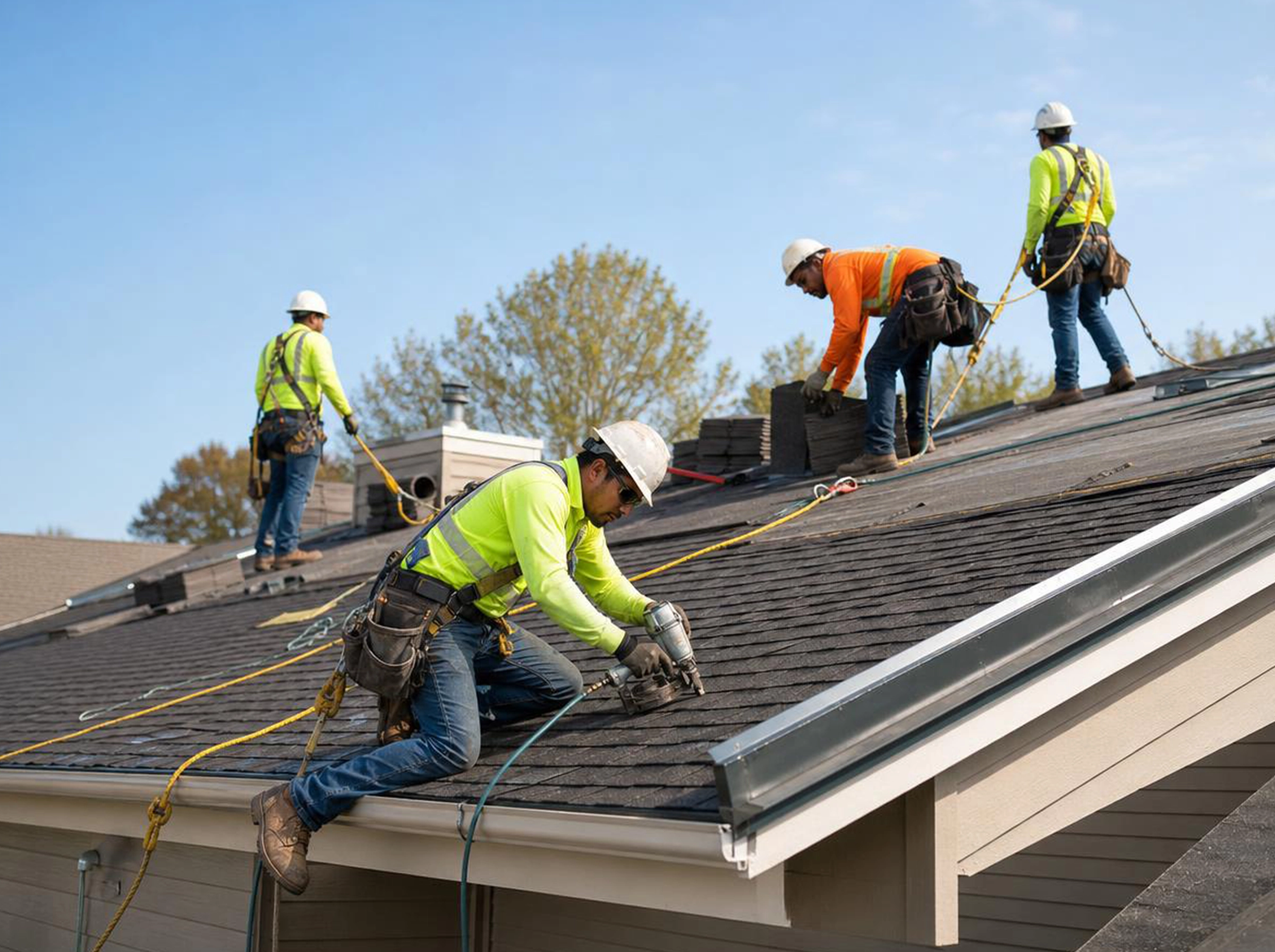
Why Buy an Existing Roofing Company?
Starting an HVAC company can require years of recruiting, licensing, customer acquisition, equipment purchases, supplier development and reputation building. Buying an established company may shorten that timeline, but only when the underlying business is transferable and the purchase is supported by careful due diligence.
Immediate Crews and Operating Capacity
Established Customer and Referral Channels
Supplier Accounts and Manufacturer Relationships
Backlog and Work in Progress
Brand, Reviews and Local Reputation
Roofing Businesses Buyers May Consider
- Residential reroofing and repair companies
- Commercial flat-roofing and membrane contractors
- Industrial roofing and maintenance businesses
- New-construction roofing contractors
- Strata, multi-family and property-management roofing specialists
- Emergency leak-response and repair companies
- Roof-maintenance and inspection businesses
- Metal roofing and architectural sheet-metal contractors
- Waterproofing, envelope and related exterior-service companies
- Mixed roofing, restoration, siding, gutter or exterior-renovation businesses
Each model has a different margin profile, labour structure, equipment requirement, seasonality pattern and liability exposure. Buyers should choose a business model that matches their experience and operational strengths rather than focusing only on revenue.
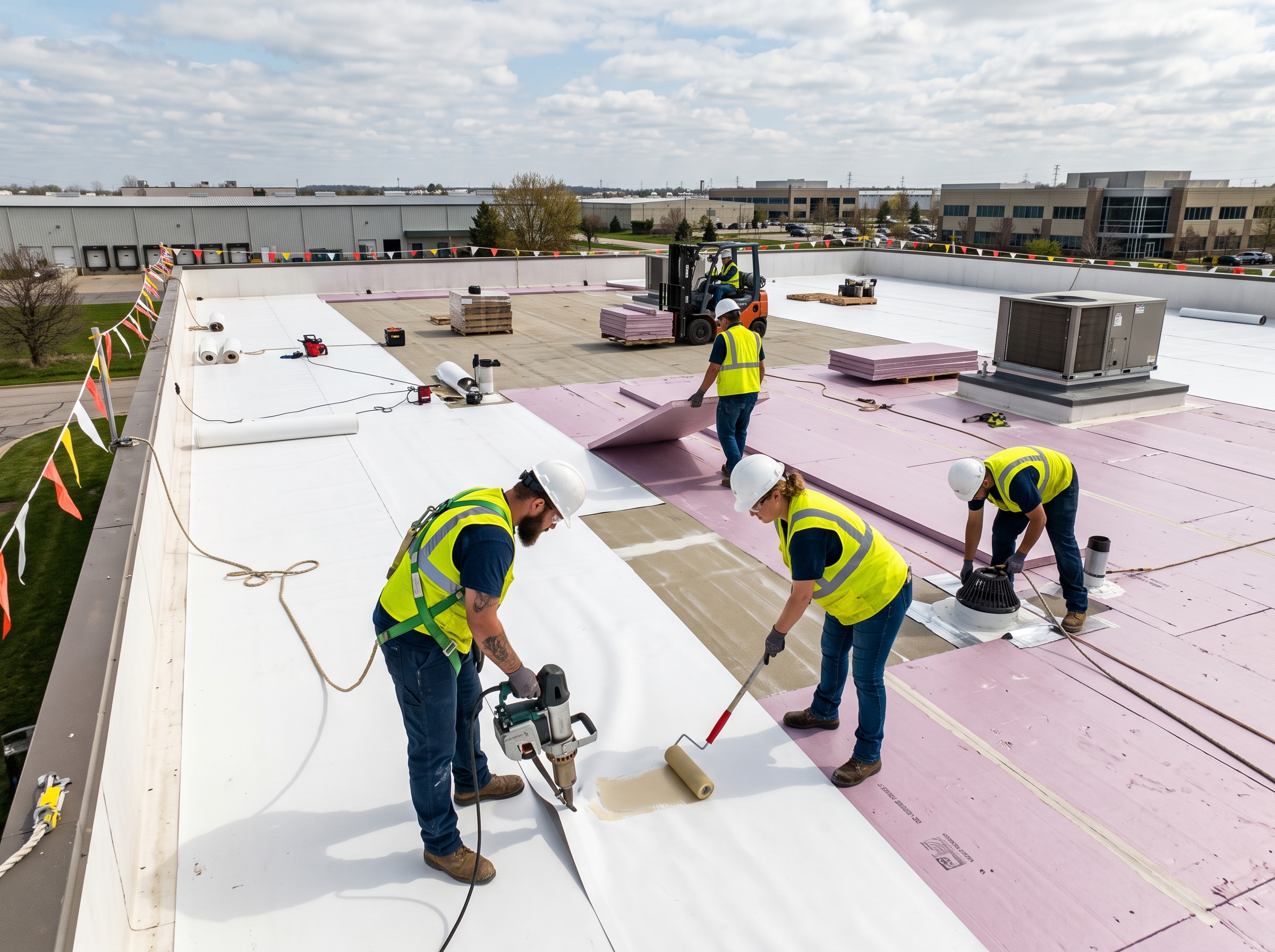
What Makes a Strong Roofing Acquisition?
1. Supportable Normalized Earnings
Review normalized EBITDA or seller’s discretionary earnings, depending on company size. Test owner adjustments, one-time storm revenue, personal expenses, related-party transactions and unusual warranty or callback costs.
2. Balanced Revenue Sources
A mix of reroofing, repair, maintenance, commercial and recurring inspection work may reduce dependence on a single project type. Buyers should understand exposure to new construction, storm events and one dominant referral channel.
3. Capable and Retainable Crews
Review employee and subcontractor tenure, compensation, productivity, certifications, safety training, immigration or work-status considerations where relevant, and dependence on a small number of forepersons.
4. Strong Safety Culture
Roofing involves elevated work and serious injury risk. Examine WorkSafeBC standing, incident history, fall-protection programs, training records, equipment inspections, subcontractor controls and insurance claims.
5. Reliable Estimating and Job Costing
Accurate measurement, labour assumptions, material pricing, production tracking and change-order control are central to margin quality. Weak job costing can make reported profitability unreliable.
6. Manageable Warranty Exposure
Understand written and implied warranties, manufacturer obligations, outstanding deficiencies, leak claims, callbacks and any commitments extending beyond closing. Historical warranty expense should be compared with current reserves and practices.
7. Diversified Customers and Referral Sources
Review concentration by property manager, contractor, strata, consultant, insurer, municipality and homeowner lead source. High concentration may be manageable, but it must be disclosed and reflected in price and structure.
8. Transferable Supplier and Manufacturer Relationships
Confirm account status, credit limits, product approvals, warranty credentials, rebates and whether relationships are attached to the corporation, the seller or specific employees.
9. Appropriate Equipment and Fleet
Inspect trucks, trailers, lifts, hoists, safety equipment, sheet-metal tools, disposal arrangements and leased assets. Determine near-term replacement needs and whether equipment is included in the purchase price.
10. Reduced Owner Dependence
A company is usually more transferable when estimating, sales, production, customer service, safety and quality control are shared across a capable team rather than controlled by one owner.
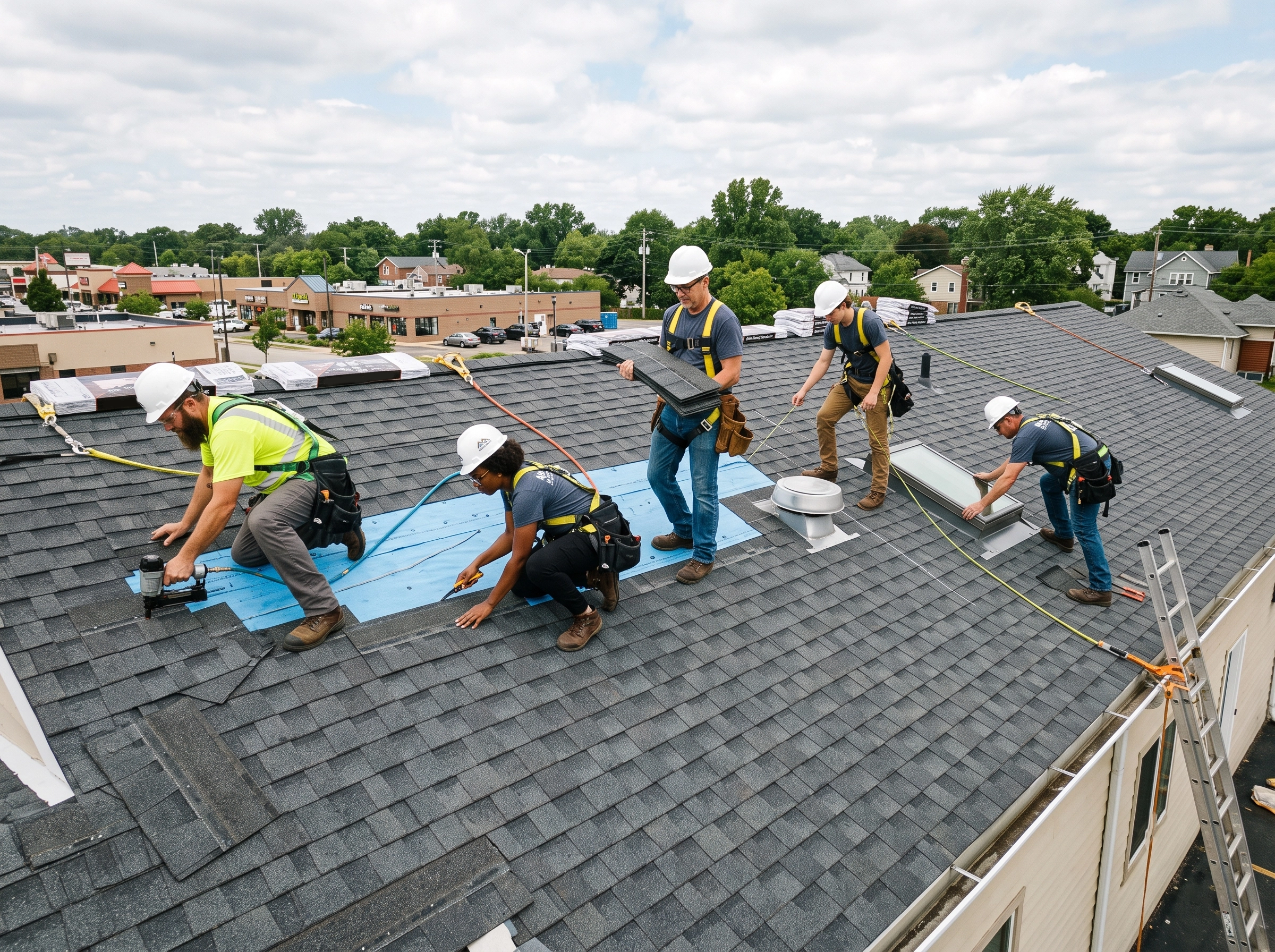
Residential, Commercial and Specialty Roofing Companies
Residential Reroofing and Repair
Commercial Flat Roofing
Maintenance and Leak Response
New Construction Roofing
Metal Roofing, Waterproofing and Building Envelope Services
Key Financial and Operational Metrics to Review
- Normalized EBITDA or seller’s discretionary earnings
- Gross margin by residential, commercial, repair, maintenance and new-construction work
- Revenue and gross profit by customer, referral source and project manager
- Backlog by start date, completion date, expected margin and contract status
- Work in progress, progress billings, deposits, retainage and under- or over-billings
- Material price exposure, supplier terms and committed purchases
- Crew productivity, labour utilization, overtime and subcontractor dependence
- Warranty claims, leak callbacks, deficiency costs and insurance claims
- Sales conversion rates, lead costs and referral-channel concentration
- Accounts receivable aging, bad debt and collection practices
- Fleet, equipment and safety-gear replacement requirements
- Working-capital needs and seasonal cash-flow patterns
- Customer, contractor, strata, consultant and property-manager concentration
- Owner dependence in estimating, sales, supervision and key relationships
No single metric establishes value. The consistency, quality and transferability of earnings are more important than headline revenue or the size of a temporary storm-related backlog.

How Roofing Companies Are Commonly Valued
Privately held roofing companies are often considered using a multiple of normalized earnings, with the appropriate approach depending on size, management depth, customer diversity, safety history, warranty exposure, backlog quality, working-capital needs and asset intensity.
Asset value may matter where the company owns significant fleet, lifts, production equipment, inventory or real estate. Revenue alone is rarely sufficient because two roofing businesses with similar sales can have very different margins, warranty obligations, customer concentration and owner dependence.
Buyers should not rely on generic industry multiples without understanding the assumptions behind them. A defensible valuation requires business-specific normalization, risk analysis and transaction structuring with qualified accounting and legal advice.
Due Diligence for a Roofing Company Acquisition
Financial Review
- Three to five years of financial statements and tax returns
- Monthly revenue and gross-margin trends
- Detailed normalization and add-back support
- Accounts receivable and payable aging
- Work-in-progress and deferred revenue
- Payroll, benefits and contractor costs
- Capital expenditure history and future requirements
Operational Review
- Dispatch and scheduling systems
- Service call volumes and response times
- Maintenance agreement records
- Job costing and callback history
- Inventory controls and warranty procedures
- Fleet and equipment condition
- After-hours and emergency-service coverage
Legal, Safety and Compliance Review
- Employee list, tenure, compensation and roles
- Trade licences, certifications and designated individuals
- Employment agreements and accrued obligations
- Key-person and retention risk
- Safety training and WorkSafeBC records
- Union or collective-agreement obligations, where applicable
Due diligence should be completed with qualified legal, accounting, insurance, safety and technical advisers. Trades Business Broker does not replace those professionals.
Financing the Purchase of a Roofing Company
Financing may include buyer equity, bank or credit-union financing, Business Development Bank of Canada financing, seller financing or a combination of sources. Availability and terms depend on the buyer, the company’s cash flow, collateral, working-capital needs, transaction structure and lender requirements.
Roofing buyers should budget beyond the purchase price. Additional capital may be needed for payroll, supplier deposits, seasonal cash-flow gaps, insurance, bonding, fleet repairs, safety equipment, marketing, warranty work and project mobilization.
A buyer should obtain financing advice early and avoid assuming that equipment value or reported revenue alone will support the full purchase price.
Our Confidential Roofing Acquisition Process
Step 1 – Buyer Consultation
We discuss your experience, preferred region, acquisition budget, available equity, financing position, operating role and roofing business model.
Step 2 – Buyer Qualification
We confirm financial capacity and acquisition readiness before sharing confidential opportunities.
Step 3 – Confidentiality Agreement
Qualified buyers sign an NDA and agree not to contact employees, customers, suppliers, landlords or competitors without authorization.
Step 4 – Opportunity Review
We provide available information in stages, allowing you to assess fit before requesting deeper disclosure.
Step 5 – Management Meeting and Site Review
When appropriate, the buyer may meet the seller and review operations, facilities, equipment and business systems under controlled conditions.
Step 6 – Offer and Transaction Structure
The parties negotiate price, included assets, working capital, transition, seller financing, conditions and risk allocation.
Step 7 – Due Diligence and Financing
The buyer and advisers verify financial, operational, legal, safety, insurance, warranty and technical information.
Step 8 – Closing and Transition
The transaction closes after conditions are satisfied, followed by an agreed transition that may include introductions, training and operational handover.
Common Mistakes Roofing Buyers Should Avoid
- Valuing the company primarily on revenue without testing normalized earnings and warranty costs.
- Assuming storm or emergency revenue will repeat
- Underestimating working capital, retainage and seasonal cash-flow needs
- Failing to verify crew retention and dependence on subcontractors
- Ignoring safety history, insurance claims or fall-protection practices
- Overlooking warranties, deficiencies, callbacks and unresolved leak claims
- Treating backlog as guaranteed profit without reviewing contracts and completion costs
- Failing to confirm supplier credit, manufacturer approvals and product access
- Contacting employees, customers or suppliers before authorization
- Entering the transaction without qualified legal, accounting and insurance advisers
Who May Be a Suitable Roofing Business Buyer?
- Experienced roofing contractors seeking ownership
- Existing roofing companies expanding into a new region or service line
- Construction, restoration or exterior-services companies pursuing a strategic acquisition
- General contractors or building-envelope businesses adding roofing capacity
- Entrepreneurs with strong operational leadership and a qualified technical team
- Family offices or private investors partnering with experienced management
A buyer does not always need to perform roofing work personally, but the business must retain the technical, safety and supervisory capacity required to operate responsibly after closing.
Protecting the Business During the Sale Process
Employees, customers, suppliers, property managers, contractors and competitors may react negatively to premature disclosure of a potential sale. Qualified buyers should not contact the seller’s staff, customers, suppliers, consultants or other relationships without written authorization.
Confidentiality protects both parties and helps preserve employee stability, customer confidence and business value while the opportunity is being evaluated.
Frequently Asked Questions
Not necessarily, but the company must retain qualified management, supervisors and crews with the technical and safety capacity to operate after closing. Buyers without roofing experience should have a credible operating plan and appropriate advisers.
Price depends on normalized earnings, management depth, workforce, customer concentration, backlog, safety history, warranty exposure, assets, working capital and owner dependence. Revenue alone is not a reliable measure of value.
They can involve larger projects, retainage, bonding, consultant oversight, working-capital demands and longer collection cycles. Residential businesses may have greater lead-generation and seasonality exposure. Quality varies by company.
Backlog can provide visibility, but buyers must verify contract status, expected margin, labour and material availability, completion costs, weather exposure, cancellation rights and working-capital requirements.
Review written warranties, manufacturer obligations, open deficiencies, leak claims, callback history, warranty reserves and how responsibility will be allocated for pre-closing work.
Potentially. Financing depends on buyer equity, credit, experience, business cash flow, collateral, working capital and transaction structure. Lender requirements vary.
Usually not at the beginning. Employee communication is typically planned for an appropriate stage of the transaction to protect confidentiality and retention.
We may know of confidential or upcoming opportunities and can record a qualified buyer’s criteria. Availability cannot be guaranteed.
Most buyers should engage a lawyer and accountant. Depending on the company, insurance, safety, tax, financing and technical specialists may also be appropriate.
Timing varies based on readiness, financing, due diligence, negotiations, third-party approvals and transaction complexity. Buyers should avoid relying on a fixed timeline before reviewing the specific opportunity.
Looking for a Roofing Company in British Columbia?
Register confidentially to discuss your acquisition criteria, financial capacity, preferred region and operating background. We will help determine whether available opportunities align with your goals and experience.