
Home ↣ Buy a Restoration Company
Buy an Established Restoration Company in British Columbia
An established restoration company can provide immediate access to trained emergency crews, specialized drying and remediation equipment, insurer and adjuster relationships, referral networks, operating systems, certifications and a recognized local reputation. For the right buyer, acquiring a functioning company may be more practical than building trust, response capacity and technical infrastructure from the ground up.
Trades Business Broker helps qualified buyers identify and evaluate restoration companies throughout British Columbia. Opportunities may include water-damage mitigation firms, fire-and-smoke restoration contractors, mould-remediation companies, contents specialists, reconstruction businesses and full-service emergency restoration operators.
The right acquisition must fit your experience, financing capacity, preferred region, service mix, emergency-response expectations and ability to manage receivables, claims documentation and regulated work.

Why Buy an Existing Restoration Company?
Established Referral and Assignment Sources
Emergency-Response Capacity
Certified and Experienced Workforce
Specialized Equipment and Facilities
Documented Operating History
Brand and Local Reputation
Restoration Businesses Buyers May Consider
- Water-damage mitigation and structural drying companies
- Fire-and-smoke restoration contractors
- Mould-remediation and environmental restoration businesses
- Contents cleaning, pack-out and storage specialists
- Emergency board-up and temporary-protection operators
- Reconstruction and repair divisions serving insured losses
- Commercial and large-loss restoration firms
- Residential insurance-restoration companies
- Property-management and strata-focused restoration businesses
- Full-service disaster restoration companies with mitigation, contents and reconstruction capabilities
Each model has a different referral structure, certification requirement, working-capital profile, equipment base and claims risk. Buyers should assess the actual economics and operational demands of the target rather than treating all restoration businesses as interchangeable.

What Makes a Strong Restoration Acquisition?
1. Supportable Normalized Earnings
Review normalized EBITDA or seller’s discretionary earnings, depending on company size. Test owner adjustments, related-party expenses, unusual catastrophe events, deferred maintenance, replacement management costs and whether historical margins can continue under new ownership.
2. Diversified Referral Sources
Evaluate revenue by insurer, adjuster, property manager, plumber, franchise network and direct customer. A company dependent on one assignment source or one personal relationship may carry significant transfer risk.
3. Reliable Job Costing and File Documentation
Strong files should connect scope, estimate, labour, materials, equipment charges, subcontractors, change orders, invoicing and collections. Weak documentation can hide margin leakage and create disputes.
4. Manageable Receivables and Working Capital
Restoration work can involve long collection cycles, holdbacks, supplemental approvals and disputed invoices. Buyers should analyze aged receivables, write-offs, billing practices and the cash required to fund payroll and materials.
5. Qualified Management and Technical Staff
A business with capable estimators, project managers, supervisors and technicians may transfer more smoothly. Identify who holds critical certifications, manages insurer portals, approves estimates and controls emergency dispatch.
6. Appropriate Equipment and Facility Capacity
Confirm that the equipment fleet matches historical workload, is properly maintained and is not overstated in value. Review warehouse, contents-storage and drying-room capacity as applicable.
7. Safety, Environmental and Compliance Discipline
Review worker-safety history, hazardous-material procedures, respirator programs, documentation, insurance coverage and any environmental or regulatory exposure.
8. Limited Owner Dependence
A company that can estimate, dispatch, supervise, invoice and maintain referral relationships without constant owner involvement is generally easier to transition.

Key Due Diligence Areas
- Five years of financial statements and tax returns where available
- Monthly revenue and gross margin by service line
- Revenue by insurer, adjuster, property manager, referral source and customer
- Aged accounts receivable, disputed files, write-offs and collection history
- Open jobs, work-in-progress, supplements, holdbacks and unbilled revenue
- Job costing by mitigation, contents, reconstruction and subcontracted work
- Employee roster, compensation, certifications, tenure and retention risk
- Independent-contractor and subcontractor arrangements
- Equipment list, ownership, leases, liens, condition and calibration records
- Vehicle fleet, maintenance history and replacement schedule
- Warehouse, office, storage and lease obligations
- Insurance policies, claims history, deductibles and exclusions
- Safety records, WorkSafeBC matters and environmental procedures
- Warranty obligations, callbacks, complaints and litigation
- Franchise, preferred-vendor, network or program agreements
- Software, estimating platforms, insurer portals and data ownership
- Licences, permits, certifications and transfer requirements
- Related-party transactions and owner-specific relationships
Key Financial Metrics to Review
- Normalized EBITDA or seller’s discretionary earnings, depending on size and structure
- Gross margin by service line and job type
- Service revenue compared with installation and new-construction revenue
- Recurring maintenance revenue and renewal rates
- Revenue and gross profit per technician
- Billable utilization, callback rates and overtime
- Customer-acquisition cost and lead-source dependence
- Accounts receivable aging and bad-debt history
- Inventory levels, obsolete parts and warranty obligations
- Capital expenditure requirements for fleet and equipment
- Working-capital needs during seasonal peaks
- Customer, supplier and referral concentration
No single metric determines value. The quality, repeatability and transferability of earnings matter more than headline revenue.
Understanding Restoration Revenue and Margins
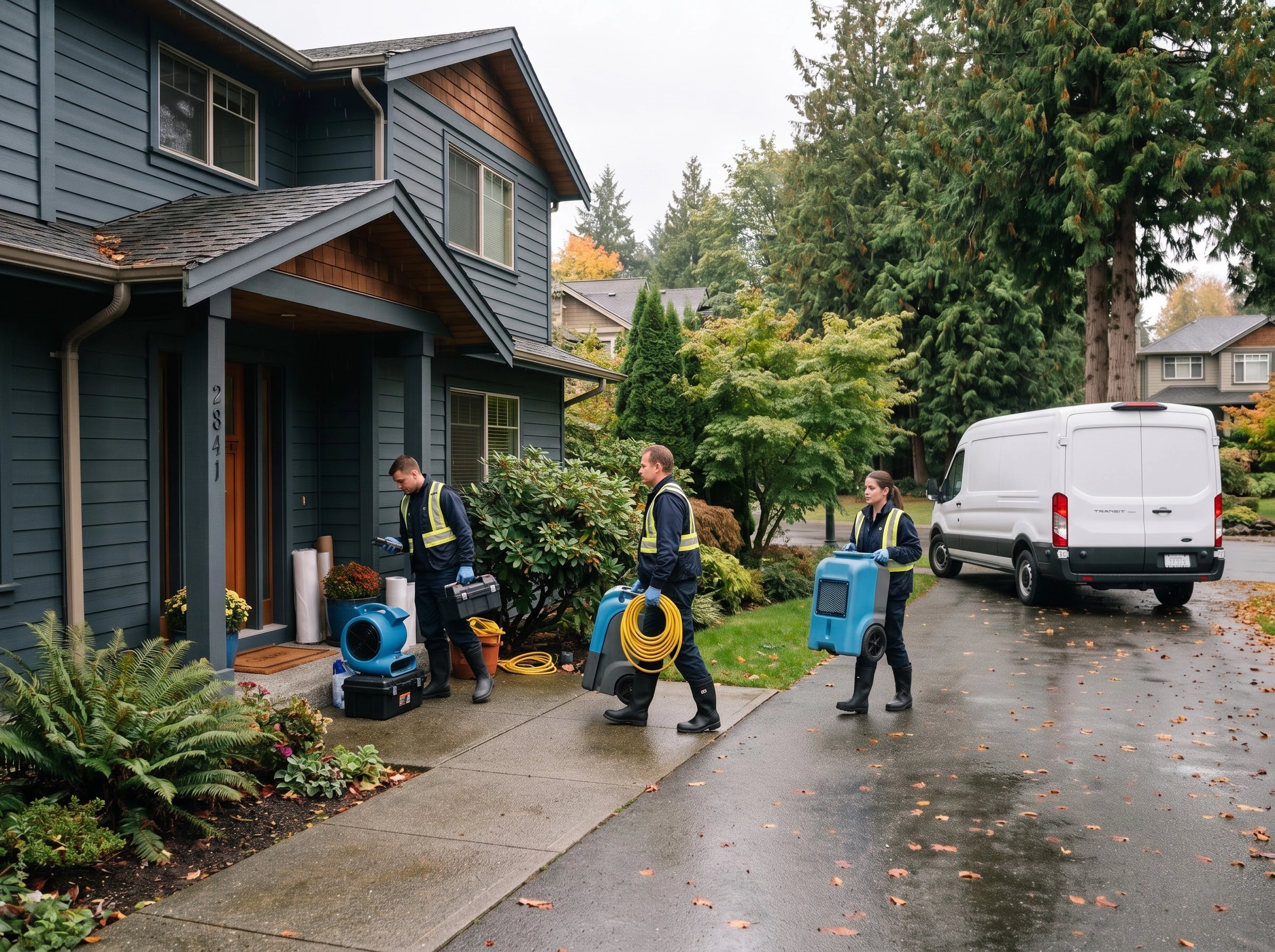
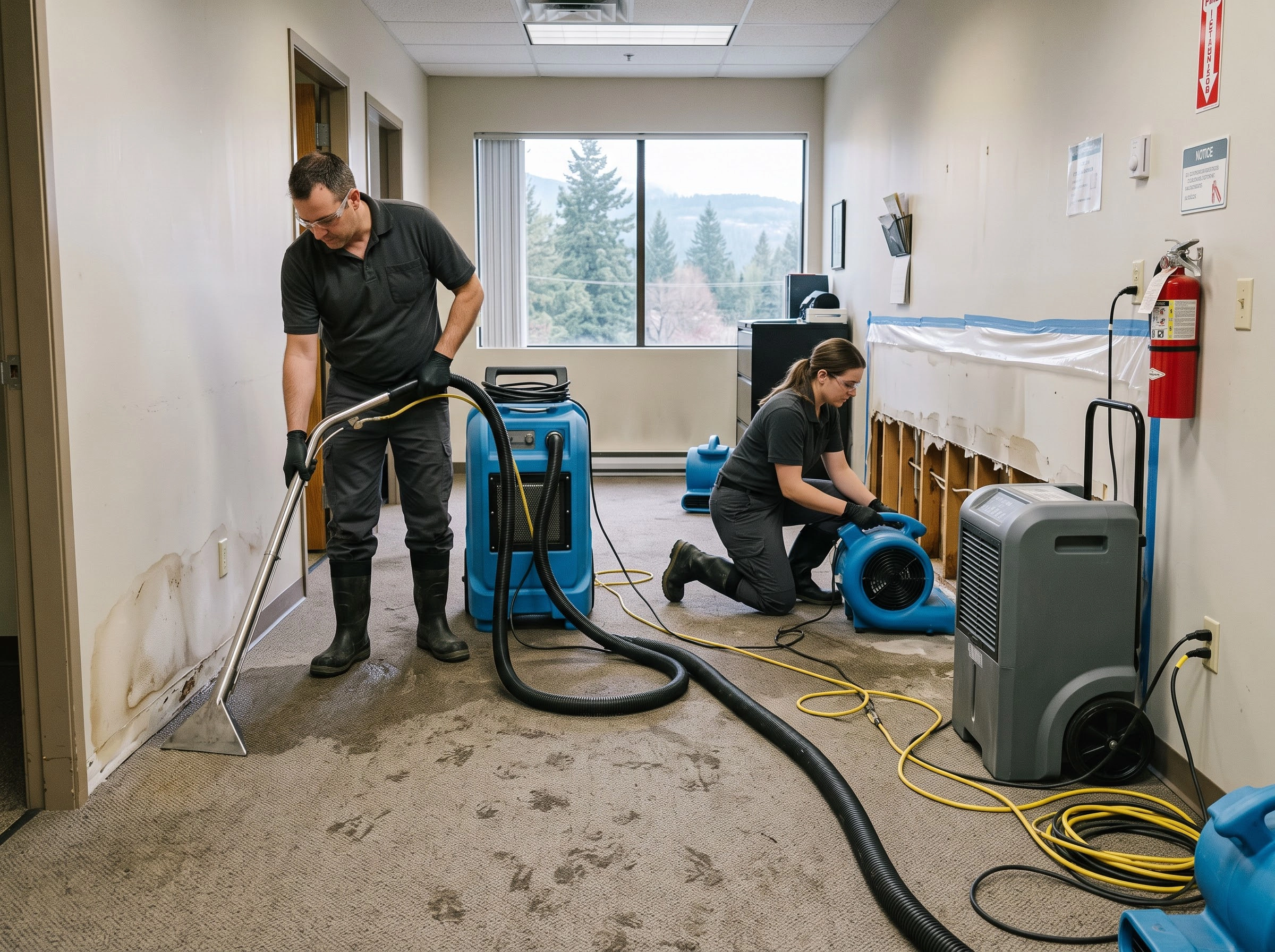
A restoration company may earn revenue from emergency mitigation, equipment rental, labour, contents handling, cleaning, demolition, environmental remediation, reconstruction and subcontracted trades. Each service line can have a different margin, collection cycle and risk profile.
Buyers should separate ordinary recurring operations from unusually large catastrophe events. A single flood, wildfire or storm season may inflate revenue and earnings temporarily. Normalization should consider several years, local event history and the company’s actual capacity to repeat the work.
Revenue quality also depends on documentation and collections. High invoiced revenue is not the same as collected cash. Buyers should compare estimates, approved scopes, supplements, invoice dates, receivable age, write-offs and final gross margin.
Insurer, Adjuster and Referral Relationships
Referral relationships can be a major source of value, but they require careful verification. Buyers should determine whether assignments arise from formal preferred-vendor programs, franchise networks, direct insurer relationships, individual adjusters, plumbers, property managers or the seller’s personal network.
Review written agreements, performance requirements, service standards, territory restrictions, renewal rights, consent requirements and termination provisions. No buyer should assume that a referral source will continue after closing without appropriate confirmation and transition planning.

Certifications, Training and Key Personnel
Restoration businesses often depend on trained employees who understand drying science, documentation, estimating, mould procedures, contents handling, safety and insurer requirements. Buyers should identify which credentials are held by the company, the owner or individual employees and whether they are transferable.
- Project managers and estimators
- Emergency-response and mitigation technicians
- Contents and cleaning supervisors
- Reconstruction managers and site supervisors
- Administrative staff responsible for claims files and insurer portals
- Employees holding specialized restoration, mould, asbestos, safety or equipment certifications
- Key staff responsible for referral relationships and quality control
Retention plans may include compensation review, stay arrangements, clear communication, training support and a credible post-closing management structure.
Equipment, Vehicles and Facilities
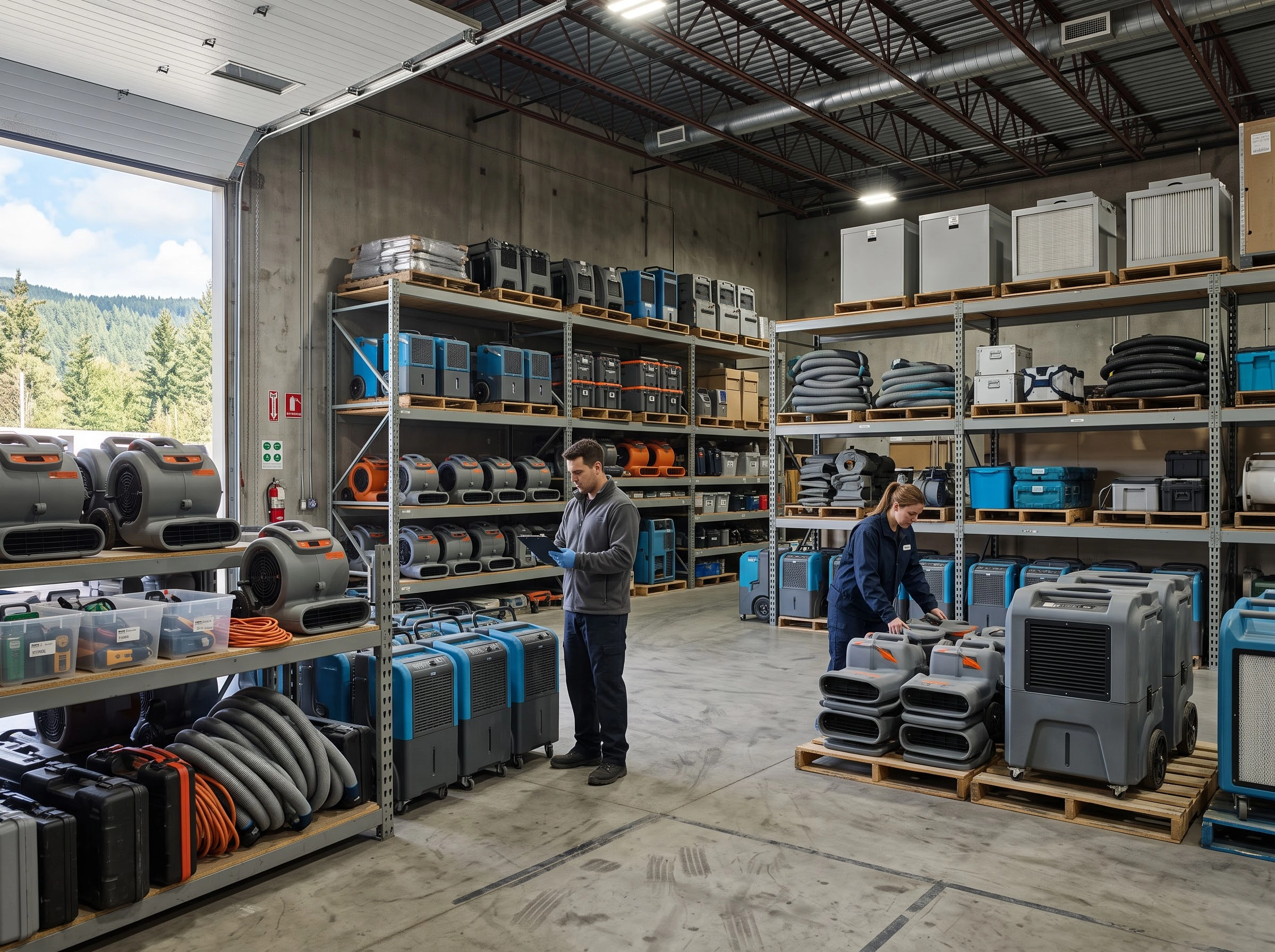
A buyer should inspect the full operating asset base rather than relying on a summarized equipment value. Restoration equipment can depreciate quickly, require calibration and become unreliable if maintenance is weak.
- Extraction units and pumps
- Air movers, dehumidifiers and air scrubbers
- Negative-air and containment equipment
- Moisture meters, thermal imaging and monitoring devices
- Contents-cleaning, ultrasonic or deodorization equipment
- Generators, temporary power and lighting
- Service vehicles, box trucks, trailers and mobile storage
- Warehouse racks, contents storage and drying rooms
- Computers, tablets, estimating and job-management systems
Confirm what is owned, leased, financed, rented or subject to liens. Equipment should be valued based on condition and usefulness, not original purchase cost.
Financing a Restoration Company Purchase
Financing may include buyer equity, commercial acquisition lending, equipment financing, seller financing or a combination of sources. Lenders typically focus on supportable cash flow, working-capital needs, receivable quality, tangible assets, management continuity and buyer experience.
Restoration acquisitions can require meaningful working capital because payroll, materials, subcontractors and equipment costs may be incurred well before invoices are collected. Buyers should prepare a realistic cash-flow plan and avoid using all available capital for the purchase price alone.
A financing discussion should begin early. Buyers should work with qualified lenders, accountants and legal advisors and should not assume that every add-back, receivable or projected assignment will receive full lender credit.
Common Mistakes When Buying a Restoration Company
- Valuing the company from revenue without testing collected cash and gross margin
- Assuming insurer, adjuster or referral relationships will transfer automatically
- Treating catastrophe-driven revenue as normal recurring performance
- Underestimating receivable delays, supplements, disputes and write-offs
- Failing to reconcile work-in-progress, unbilled revenue and open claims files
- Overlooking certification, key-person and employee-retention risk
- Accepting equipment values without inspection, lien searches and maintenance records
- Ignoring safety, environmental, warranty and insurance exposure
- Underestimating the seller’s role in estimating, dispatch, collections and referral management
- Failing to review franchise, vendor-network or territory agreements
- Skipping legal, tax, employment, insurance and environmental advice
- Sharing confidential information before qualification and NDA completion
No single metric determines value. The quality, repeatability and transferability of earnings matter more than headline revenue.
Our Buyer Acquisition Process
Step 1 – Buyer Registration
We begin by understanding your background, preferred region, target service mix, investment range, financing capacity and desired level of operational involvement.
Step 2 – Qualification and Confidentiality
Before identifying information is released, buyers may be required to provide identification, financial-capacity information and a signed confidentiality agreement.
Step 3 – Opportunity Review
We introduce suitable opportunities and provide available information to help you decide whether a business warrants deeper investigation.
Step 4 – Initial Assessment
We help frame the key questions around earnings, referral sources, receivables, WIP, employees, certifications, equipment, owner dependence and transition.
Step 5 – Offer and Deal Structure
A qualified buyer may prepare a letter of intent or offer with conditions relating to due diligence, financing, lease, contracts, receivables, WIP, employees, equipment and other material matters.
Step 6 – Due Diligence and Closing
The buyer and professional advisors verify financial, legal, operational, tax, insurance and commercial information before conditions are removed and closing documents are completed.
Step 7 – Transition
A practical transition may include employee communication, referral-source introductions, insurer-portal training, software handover, open-file review and limited seller support after closing.
Confidentiality When Buying a Restoration Company
Most restoration companies are marketed confidentially. Premature disclosure can unsettle employees, insurers, adjusters, property managers, suppliers and competitors. Buyers should not contact staff, customers, referral sources, landlords or business partners without written authorization through the transaction process.
Confidentiality protects both parties and helps preserve business value. Qualified buyers should be prepared to sign an NDA and demonstrate financial capacity before receiving identifying information or detailed financial records.
Who Is This Page For?
- Existing restoration owners seeking geographic expansion
- Construction, plumbing or property-service companies adding restoration capabilities
- Experienced restoration managers pursuing ownership
- Strategic buyers seeking insurer relationships, crews or equipment
- Search-fund, family-office or private buyers seeking an established service company
- Entrepreneurs with relevant operational, insurance, construction or management experience
Frequently Asked Questions
Pricing varies based on normalized earnings, referral concentration, receivable quality, management depth, equipment, working-capital needs and risk. A business-specific valuation is more reliable than a generic multiple.
Some relationships may be supported by formal agreements, while others depend on individual performance and trust. Buyers must review the specific arrangement and plan introductions carefully.
The parties must agree whether receivables remain with the seller, transfer to the buyer or are adjusted at closing. Quality, collectability, disputes and tax treatment require professional review.
WIP may include open mitigation, contents or reconstruction jobs with incurred costs, unbilled amounts, supplements, holdbacks or incomplete scopes. It requires file-by-file reconciliation.
Review several years and separate extraordinary event-driven work from ordinary operations. Buyers should not assume a major flood, storm or wildfire season will repeat.
The asset list may include extraction, drying, air-quality, monitoring, contents, vehicles, storage and office systems. Ownership, condition, leases and liens must be verified.
It may be possible where qualified management remains, but buyers should realistically assess technical, safety, insurance, documentation and emergency-response demands.
Timing depends on complexity, financing, due diligence, receivables, WIP, contracts, lease matters and the parties’ readiness. A fixed timeline should not be promised without reviewing the transaction.
A negotiated transition is common. The scope should reflect the seller’s role in referrals, estimating, collections, operations and employee relationships.
Complete the buyer-registration process, provide the requested qualification information and sign the applicable confidentiality agreement. Suitable opportunities can then be introduced as available.
Looking for an established restoration company in British Columbia?
Register confidentially with Trades Business Broker to discuss your acquisition criteria, financing readiness and preferred service model. We help qualified buyers evaluate restoration opportunities with a practical focus on earnings quality, referral concentration, receivables, WIP, certifications, employees, equipment and transition risk.